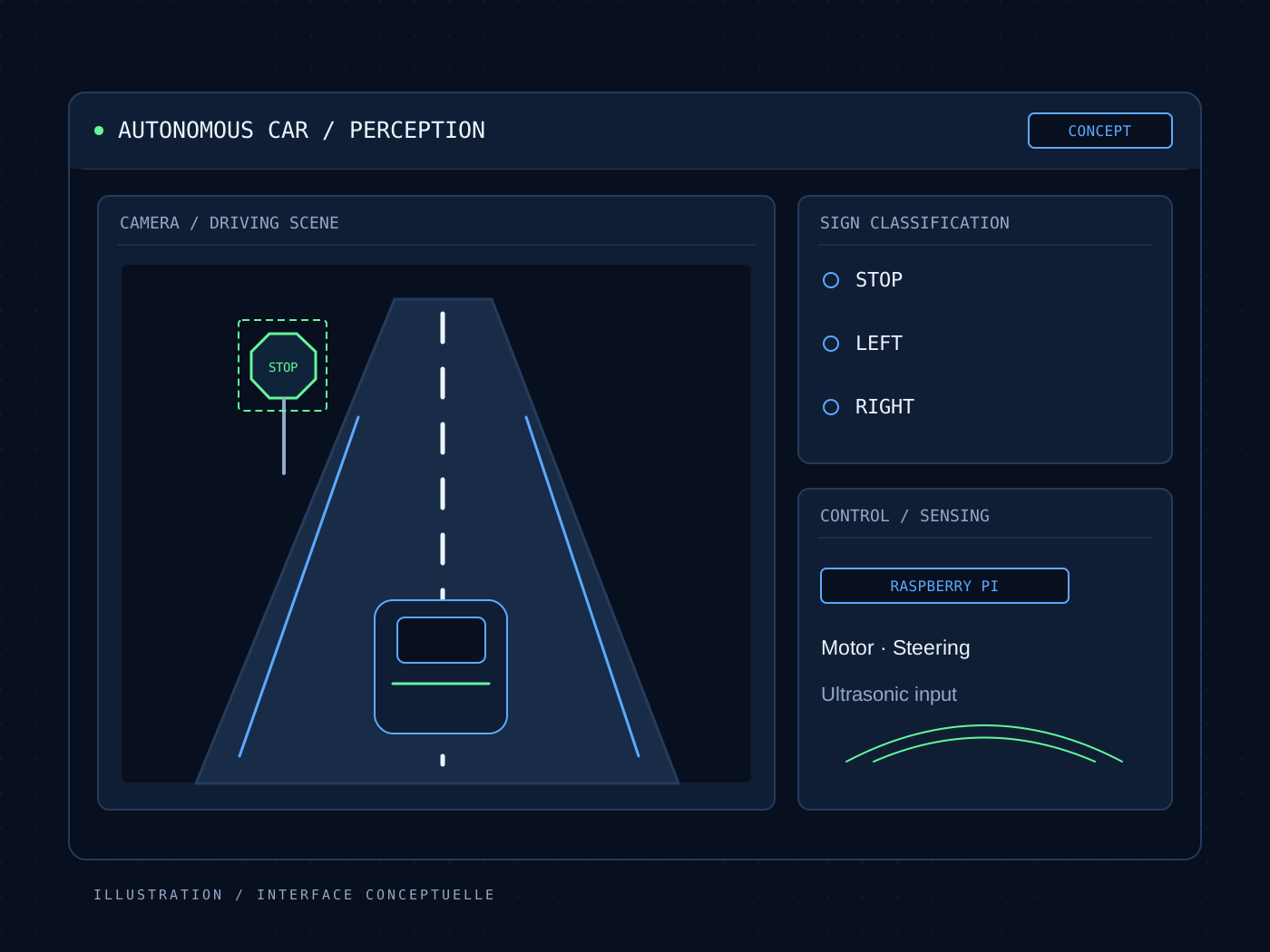
 Illustration
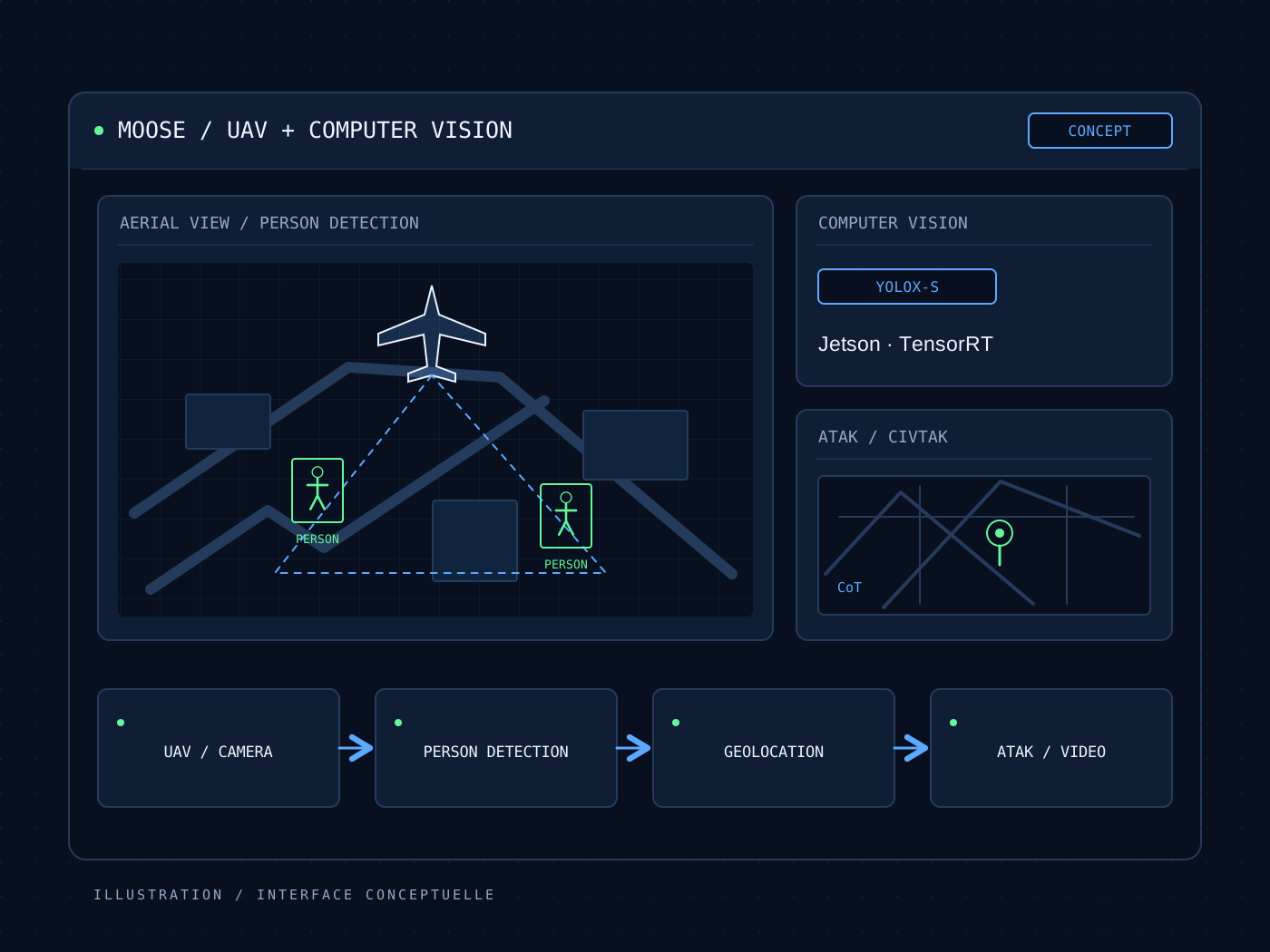
MOOSE
Aerial person detection. Computer vision on a fixed-wing UAV, connected to ATAK.
Explore the projectRobotics / Human–machine interaction
A robotic hand that mirrors human gestures through computer vision and servo control.
01 / The challenge
Translate camera observations into useful physical motion across software, communication and mechanical interfaces.
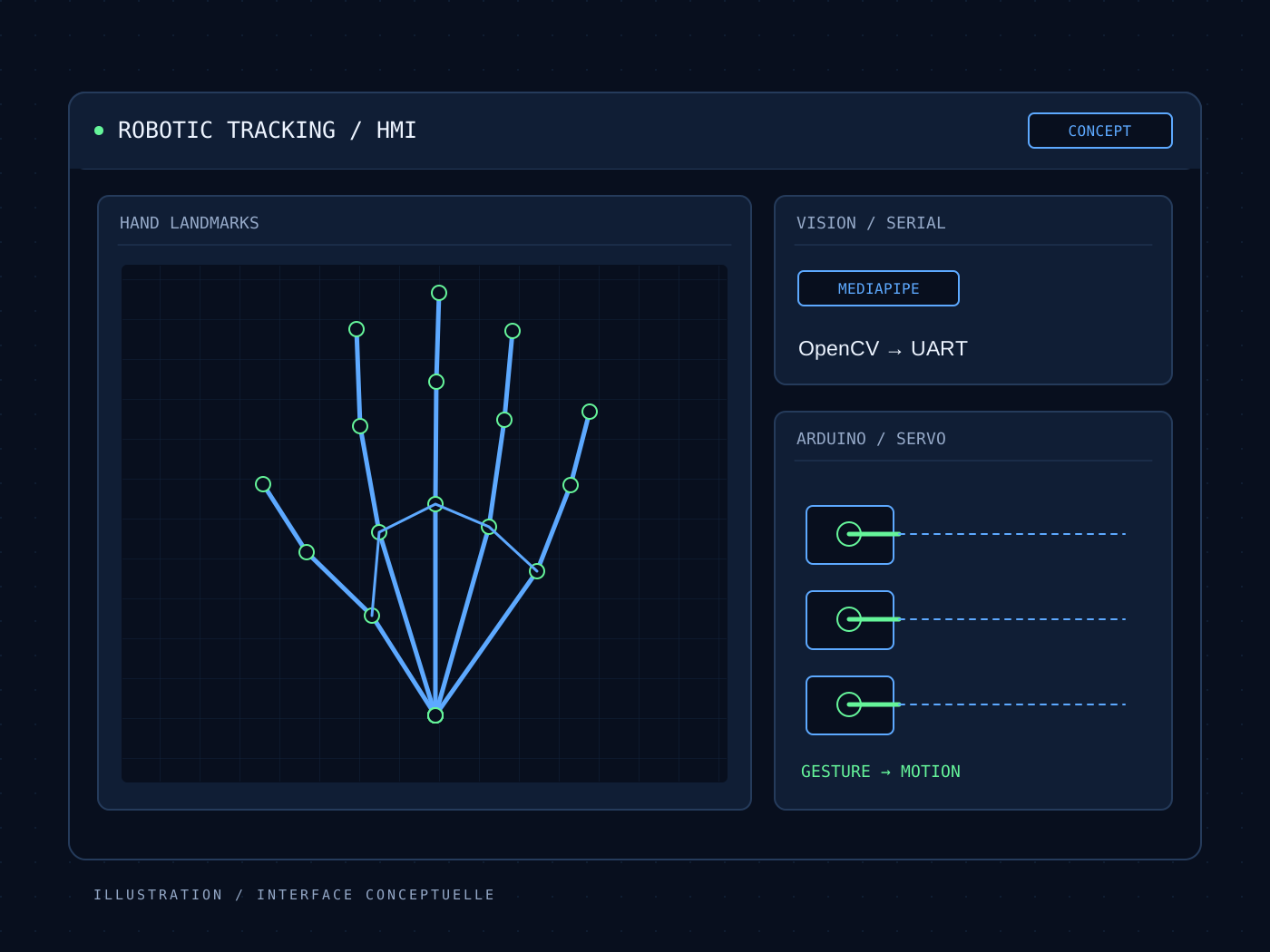
A camera becomes the interface between a human hand and a physical robot. Python extracts hand landmarks, maps them to movement commands and sends them over UART to an Arduino Mega. Servos pull the tendons of a 3D-printed hand to reproduce finger movement.
02 / The approach
Detect hand landmarks with MediaPipe and process camera images with OpenCV and cvzone.
Map finger positions to servo commands and transfer them to the Arduino through a serial UART connection.
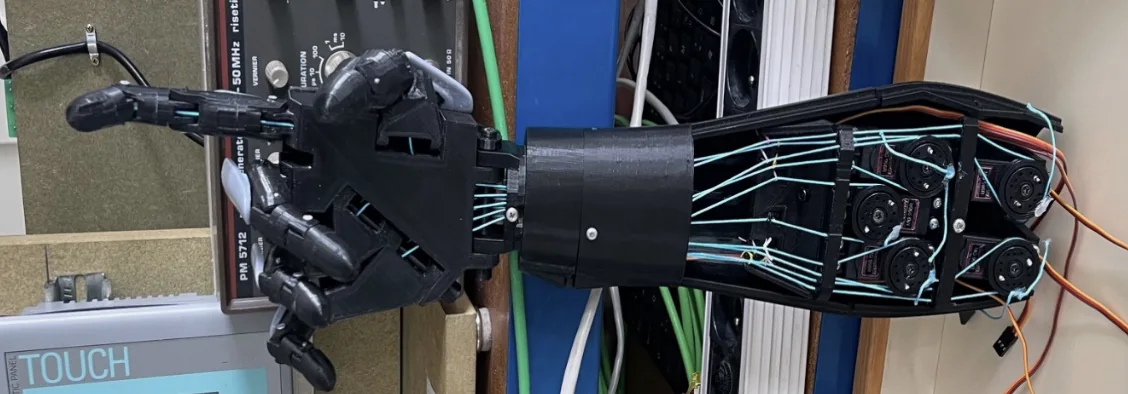
Integrate MG996R servos with a printed inMoov-based hand, tendon wires and elastic finger returns.
03 / Outcomes
04 / Scope & next steps
The mechanical hand is adapted from the open-source inMoov3D humanoid model; the project integrates vision, control and the printed mechanism.
Field notes / Visual documentation
Continue exploring